
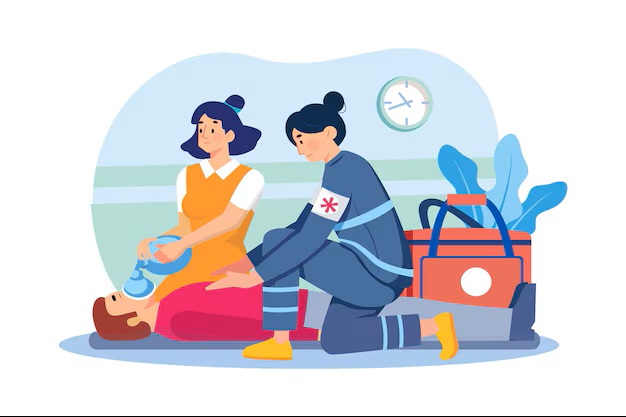




Healthcare is one of the fastest-growing industries in the world, and within it, emergency medicine sits at the sharp end. When someone's life is on the line, trained emergency medical assistants are the people who show up first and keep things from falling apart before advanced help arrives. If you've been thinking about breaking into this field, or you're already working in healthcare and want to sharpen your emergency response skills, you're in the right place.
The challenge isn't finding courses. It's finding the right one. A quick search turns up dozens of options ranging from free online modules to intensive in-person programs that cost thousands of dollars. Some are nationally recognized. Others look impressive on paper but won't actually help you land a job or respond confidently in a crisis.
We did the hard work of sorting through the noise. This guide covers the best emergency medical assistant courses available in 2026, what makes each one worth considering, who it's best suited for, and what you can realistically expect to get out of it. Whether you're starting from scratch or looking to build on existing qualifications, there's something on this list for you.
Understanding Emergency Medical Assistant Training: What to Expect
Before we get into specific programs, it's worth taking a step back and understanding what emergency medical assistant training actually covers and how different types of programs approach it.
Emergency medical assistants (EMAs) occupy a critical space between basic first aid providers and fully certified EMTs or paramedics. Their job involves assessing patients, assisting with emergency procedures, managing equipment, and providing care under the direction of emergency medical technicians, paramedics, or physicians. The depth of your training determines the scope of what you're allowed to do and where you can work.
1. Entry-Level Certificate Programs
These are designed for people stepping into emergency medicine for the first time. They cover the fundamentals: patient assessment, vital signs, basic life support, wound care, and emergency protocols. Most can be completed in a matter of weeks and are a smart starting point before investing in longer, more expensive certifications.
2. National Certification Programs
If you want to work in a formal healthcare setting, national certification matters. Programs that lead to credentials from organizations like the National Healthcareer Association (NHA) or the American Association of Medical Assistants (AAMA) are widely recognized by employers and can open doors that non-certified candidates simply can't walk through.
3. Online Self-Paced Courses
Thanks to the growth of eLearning, you can now complete solid emergency medicine training from your laptop. These programs are perfect for working adults who can't commit to a fixed classroom schedule. The trade-off is that hands-on skills practice may be limited, which is why many online programs include a clinical or practical component.
4. In-Person and Hybrid Programs
Some skills, like CPR, patient immobilization, or managing airways, genuinely need to be practiced in person. Hybrid programs combine online theory with required in-person lab sessions, giving you the flexibility of online learning without skipping the hands-on training that emergency response demands.
5. Continuing Education and Specialty Training
Already working in healthcare? Many experienced professionals pursue continuing education courses to expand their emergency response skills, add credentials to their resume, or meet recertification requirements. These courses are usually shorter, more focused, and assume a baseline of existing knowledge.
The Best Emergency Medical Assistant Courses in 2026
1. American Red Cross Emergency Medical Response (EMR)
Best For: Healthcare professionals, athletic trainers, gym staff, and workplace safety officers who need a recognized emergency response certification that goes beyond basic first aid.
The American Red Cross has been a trusted name in emergency training for well over a century, and their Emergency Medical Response course remains one of the most credible entry points into the field. It's not a full EMT program, but it's substantially more comprehensive than a standard first aid certification and it's respected by employers across healthcare, fitness, and corporate safety sectors.
What Makes It Stand Out
The Red Cross EMR course blends science-based instruction with real-world scenario practice. You'll cover everything from cardiac emergencies and respiratory distress to trauma management and medical emergencies, all taught by certified instructors with practical field experience.
Key Features:
• Covers professional-level emergency response skills beyond basic first aid
• Recognized by healthcare employers, schools, athletic programs, and corporate organizations
• Blended learning option combines online study with hands-on skills sessions
• Meets OSHA and regulatory compliance requirements for many industries
• Recertification available every two years to keep credentials current
Pricing: $150–$350 depending on location and delivery format
Verdict: If you want an emergency response certification that carries real weight in a professional context without committing to a full EMT program, the Red Cross EMR is one of the most reliable options out there. It's also a logical stepping stone if you plan to pursue more advanced training down the road.
2. NREMT EMT-Basic Certification
Best For: Individuals who are serious about building a career in emergency medical services and want the most widely recognized entry-level credential in the field.
Let's be straightforward here: if your goal is to work as an emergency medical technician in the United States, the National Registry of Emergency Medical Technicians (NREMT) certification is the gold standard. It's not the easiest or cheapest path, but it's the one that actually gets you hired by EMS agencies, fire departments, and hospital systems.
The EMT-Basic program requires completing an approved state training course, typically 120 to 150 hours of classroom instruction and clinical experience, before you can sit for the NREMT cognitive and psychomotor exams. Many community colleges and vocational schools offer state-approved programs, so the institutional provider varies, but the credential you're working toward is consistent.
Key Features:
• Nationally recognized credential accepted in all 50 states
• Prepares you to handle medical emergencies, trauma, and cardiac events
• Includes significant hands-on clinical training in real emergency settings
• Opens the door to higher-level certifications: Advanced EMT, Paramedic
• Required by virtually all EMS employers for entry-level positions
Pricing: $1,000–$2,500+ depending on program provider and location
Verdict: This is the real thing. If you're committed to working in emergency medicine as a career rather than as a supplemental skill, EMT-Basic certification through an NREMT-approved program is where you need to start. Yes, it takes more time and money than a quick online certificate, but the career payoff is proportional.
3. Coursera: Emergency Medical Care Courses (Johns Hopkins & Others)
Best For: Students, healthcare professionals, and curious learners who want solid foundational knowledge in emergency medicine from top academic institutions, without committing to a full certification program.
Coursera has quietly become one of the best platforms for healthcare education, and emergency medicine is no exception. Several top universities and medical schools offer emergency care courses through the platform, with Johns Hopkins' offerings being particularly well-regarded.
These courses won't certify you as an emergency medical technician, but they do provide genuinely valuable education in emergency medical concepts, patient assessment frameworks, and the clinical reasoning behind emergency decision-making. Think of them as the academic backbone that makes your practical training more meaningful.
Key Features:
• Courses from Johns Hopkins, Duke, and other top medical schools
• Self-paced format fits around work and life commitments
• Verified certificates available for professional development portfolios
• Covers topics from trauma care basics to emergency pharmacology
• Financial aid available for learners who qualify
Pricing: Free to audit; $49–$79/month for certificates
Verdict: Coursera won't replace hands-on EMA training, but it can significantly strengthen the theoretical foundation underneath it. It's especially useful if you're preparing for a certification exam or want to understand emergency medicine at a deeper level before jumping into a clinical program.
4. AAPC Medical Assistant Training Program
Best For: Career changers and new healthcare workers who want a nationally recognized medical assistant credential with a meaningful emergency response component.
The American Academy of Professional Coders (AAPC) has expanded well beyond its roots in medical coding. Their Medical Assistant training program is a comprehensive online program that prepares students for the Certified Medical Assistant (CMA) exam while covering clinical skills including emergency procedures, vital signs, patient assessment, and basic triage.
It's a good option for people who want broader medical assistant credentials but specifically want to be prepared for emergency situations in clinical settings like urgent care centers, physician offices, and outpatient clinics where emergencies do happen even if they're not the daily focus.
Key Features:
• Prepares for nationally recognized CMA credentialing exam
• Covers clinical emergency procedures alongside administrative skills
• Fully online with student support and exam prep resources
• Job placement assistance included with many program packages
• Accepted by healthcare employers across outpatient and clinical settings
Pricing: $1,499–$1,999 for full program
Verdict: If you want a complete medical assistant career package that includes solid emergency preparedness rather than a standalone EMA course, AAPC's program delivers strong value. The price is higher than some alternatives, but the credential carries genuine market weight.
5. Alison: Emergency Medical Technician Certificate
Best For: Absolute beginners who want a no-cost introduction to emergency medical concepts before committing to a paid certification program.
Alison is the kind of resource that often gets dismissed because it's free, which is a mistake. Their emergency medical technician and emergency care courses offer a surprisingly thorough overview of core EMA concepts, including patient assessment, emergency scenarios, medical terminology, and basic life support principles.
You won't be walking out of an Alison course ready to staff an ambulance. What you will have is a solid foundational understanding of how emergency medicine works, which is genuinely useful whether you're deciding if this career path is right for you, preparing for a more formal program, or filling knowledge gaps in an existing role.
Key Features:
• Completely free to complete; optional paid certificates available
• Self-paced with no enrollment deadlines or commitments
• Covers emergency assessment, trauma basics, cardiac emergencies, and more
• Great bridge course before investing in a formal certification program
• Accessible on mobile for learning on the go
Pricing: Free (certificates available for a small fee)
Verdict: For zero dollars, Alison gives you more than you'd expect. It's not a substitute for proper emergency medical training, but as a starting point or supplemental resource, it's hard to argue against it.
6. NHA Certified Clinical Medical Assistant (CCMA) Exam Prep
Best For: Medical assistants working in clinical settings who want a recognized credential that validates their emergency response and clinical skills.
The National Healthcareer Association's CCMA credential is one of the most recognized medical assistant certifications in the country, accepted by hospitals, clinics, urgent care centers, and physician practices nationwide. While it's a broader clinical credential rather than a pure emergency medicine certification, the exam and prep materials cover emergency procedures, patient care protocols, and clinical response skills extensively.
Many employers now require or strongly prefer CCMA-certified candidates for clinical roles, which means this credential does double duty: it validates your overall clinical competence while demonstrating emergency preparedness.
Key Features:
• Widely accepted by employers across clinical and healthcare settings
• Exam covers emergency procedures, patient assessment, and clinical skills
• Multiple prep course options available from various providers
• Affordable exam fee compared to many full training programs
• Recertification required every two years to stay current
Pricing: $149 exam fee; prep courses vary ($100–$500)
Verdict: If you're already working in a clinical environment and need a credential that opens doors without going back to school full-time, the NHA CCMA is one of the most cost-effective options on this list. Pair it with a focused emergency response course and you've got a compelling professional package.
7. FEMA Independent Study: Emergency Medical Preparedness
Best For: Community responders, public safety workers, and healthcare professionals who want free, government-developed training in emergency preparedness and mass casualty response.
FEMA's Emergency Management Institute offers free online independent study courses that cover everything from basic emergency preparedness to mass casualty incident management. While these aren't clinical certifications in the traditional sense, courses like IS-100 (Incident Command) and medical-specific modules are genuinely valuable for anyone working in or adjacent to emergency response.
These courses are widely recognized within the public safety and emergency management community, and completing certain FEMA courses is required for some government and healthcare positions. Best of all, they're completely free and self-paced.
Key Features:
• 100% free with official FEMA certificates upon completion
• Covers mass casualty response, incident command, and emergency coordination
• Self-paced online format with no prerequisites for most courses
• Recognized in public safety, healthcare, and government sectors
• Complements clinical training with a systems-level perspective on emergency response
Pricing: Free
Verdict: FEMA's free courses aren't glamorous, but they fill an important gap that most clinical programs skip entirely: the organizational and systems side of emergency response. For anyone serious about emergency medicine, completing relevant FEMA courses alongside a clinical program rounds out your preparation in a meaningful way.
8. ProTrainings Emergency Medical Care
Best For: Workplace safety officers, fitness professionals, teachers, and others in non-clinical settings who need practical emergency response skills and recognized certifications quickly.
ProTrainings has built a reputation for delivering high-quality, accredited health and safety training at reasonable prices. Their emergency care courses cover CPR, AED use, first aid, and expanded emergency medical response at various certification levels, all available online with options for in-person skills assessment where required.
The platform is clean and easy to navigate, the courses are concise without being superficial, and the certifications are accepted by a wide range of employers and regulatory bodies including OSHA, ANSI, and various state health departments.
Key Features:
• Accredited by multiple regulatory bodies including OSHA and ANSI
• Fast completion times (4–8 hours) without cutting corners on content
• Certificates are downloadable immediately upon course completion
• Group pricing available for organizations training multiple employees
• CPR/AED modules can be bundled with broader emergency care courses
Pricing: $30–$60 per course
Verdict: ProTrainings is the practical choice for people who need solid, recognized emergency care training without a big time or money commitment. It's not the path to becoming an EMT, but for workplace emergency preparedness it hits the mark.
9. American Medical Colleges Emergency Medicine Certificate Programs
Best For: Pre-medical students, recent graduates, and healthcare professionals who want in-depth clinical exposure to emergency medicine in a structured, supervised setting.
Various medical colleges and healthcare institutions offer certificate programs in emergency medicine that combine formal coursework with clinical rotations. These programs are more intensive than online courses and more affordable than full degree programs, making them a smart middle path for people who are serious about emergency medicine as a specialty area.
The specific features and pricing vary by institution, but the common thread is supervised clinical practice alongside foundational coursework in emergency assessment, trauma management, toxicology, and critical care basics.
Key Features:
• Combination of classroom instruction and supervised clinical hours
• Strong preparation for national certification exams
• Often affiliated with teaching hospitals, providing real patient exposure
• Networking opportunities with emergency medicine physicians and specialists
• Can serve as a bridge to advanced clinical training or medical school prep
Pricing: $3,500–$5,000+ depending on institution and program length
Verdict: These programs cost more and demand more, but they also prepare you more thoroughly than any online-only course can. If emergency medicine isn't just a career interest but a genuine passion, this level of training will show up in your skills and your resume.
10. edX: Emergency Care and Medical Response Courses
Best For: Learners who want flexible, university-backed emergency medicine education that can be completed on their own timeline.
Like Coursera, edX has grown into a serious platform for healthcare education. Their emergency care and medical response offerings include courses from major universities and health institutions covering topics like emergency triage, disaster medicine, trauma basics, and emergency pharmacology.
What edX does particularly well is partner with global institutions, so you can find emergency medicine perspectives from healthcare systems around the world. This is especially useful if you work in international healthcare or want to understand how emergency response differs across contexts.
Key Features:
• Courses from Harvard, MIT, and international medical institutions
• Free audit option available on most courses
• Verified certificates available for professional development purposes
• Self-paced learning with no fixed class schedule
• Wide range of emergency care topics from basic to advanced
Pricing: Free to audit; $50–$300 for verified certificates
Verdict: edX is a solid complement to hands-on emergency training. Use it to deepen your theoretical knowledge, prepare for certification exams, or explore specific areas of emergency medicine you want to understand better.
How to Choose the Right EMA Course: A Practical Framework
With ten strong options in front of you, the question becomes: which one is actually right for your situation? Here are the questions worth asking before you commit.
1. What's your end goal?
This matters more than anything else. If you want to work full-time in emergency medical services, nothing replaces NREMT certification. If you want to add emergency response competence to an existing healthcare role, a professional certificate from the Red Cross or NHA makes more sense. If you're testing the waters before committing, start with something free like Alison or FEMA courses.
2. How much time can you realistically commit?
Be honest here. A 150-hour EMT program requires genuine dedication. If you're working full-time and juggling other responsibilities, a self-paced online course might be the only realistic starting point, with a plan to pursue more intensive training once you have the time and resources available.
3. What does your budget look like?
Emergency medical training ranges from completely free to several thousand dollars. The most expensive programs aren't always the best fit for your situation. Match the investment level to the career impact you expect. A $30 ProTrainings course might be exactly what a school nurse needs. The same investment would be insufficient for someone trying to land a hospital emergency department role.
4. Does it need to be hands-on?
Emergency medicine is fundamentally a physical skill set. Online theory is valuable, but if you've never practiced CPR on a mannequin or simulated a patient assessment, you're not fully prepared. Look for programs that include practical components, even if the majority of coursework is online.
5. Who recognizes the credential?
Before enrolling anywhere, confirm that the certification or certificate is recognized by the employers or institutions you're targeting. NREMT certification is universally recognized in EMS. NHA and AAMA credentials are widely accepted in clinical settings. Some smaller platforms offer certificates that look great but mean little to hiring managers.
Quick Decision Guide
Just starting out and want a free introduction? Try Alison or FEMA independent study courses. Ready for a real career in EMS? NREMT EMT-Basic certification is the only serious answer. Working in healthcare and need to sharpen emergency skills? Red Cross EMR or NHA CCMA preparation. Want academic depth without committing to a full program? Coursera or edX emergency medicine courses. Need a quick, recognized certification for workplace safety? ProTrainings emergency care courses.
Final Thoughts
Emergency medical training isn't one-size-fits-all, and that's actually a good thing. Whether you're a complete beginner trying to figure out if this field is for you, a working healthcare professional looking to strengthen your emergency response skills, or someone with a clear goal of becoming a certified EMT, there's a program on this list that fits where you are and where you want to go.
The most important thing isn't finding the perfect course before taking any action. It's starting. Most of the programs above offer free trials, audits, or introductory modules. Pick the one that makes the most sense for your goals and budget, take a look at the curriculum, and see how it feels.
Emergency medicine is challenging, high-stakes, and genuinely meaningful work. Whatever path you take to get there, the skills you build will matter every time you're in the room when someone needs help the most. Find a solid program, invest in your training, and then focus on what really counts: becoming the kind of responder that people can count on.


