




Picture this: someone collapses in front of you. Their breathing stops. You're the only one around. Do you know what to do?
Most people freeze in this moment. Not because they're cowards, but because they've never learned CPR. They've seen it in movies, sure. They know chest compressions exist. But knowing something exists and knowing how to actually do it are completely different things.
Here's the uncomfortable truth: CPR training is one of those skills everyone thinks they should have, but most people never get around to learning. We tell ourselves we'll take a class "someday." That someday rarely comes.
But 2026 might be your year. CPR courses have evolved dramatically. They're more accessible, more engaging, and more practical than ever before. You don't need to sit through eight hours of boring lectures in a musty community center basement anymore. Modern CPR training fits your schedule, your learning style, and your budget.
This guide covers the best CPR courses available in 2026, from traditional in-person certifications to online options, from basic skills to advanced professional training. Whether you're a parent who wants to protect your kids, a professional that needs certification for work, or just someone who wants to be prepared, there's a course here for you.
Why CPR Training Actually Matters
Let's skip the dramatic statistics for a moment. You know cardiac arrest is serious. You know CPR saves lives. Everyone knows this.
What you might not know is how often you'll actually be near someone who needs CPR. It's not just strangers in public places. It's your aging parent. Your colleague at work. Your neighbor on the sidewalk. Your kid's coach at practice.
Cardiac emergencies don't announce themselves with convenient timing. They happen during family dinners, business meetings, grocery store trips, and backyard barbecues. They happen when the nearest paramedic is ten minutes away and the person in front of you has maybe four minutes before brain damage begins.
CPR training gives you those critical minutes. Not Hollywood CPR where you do compressions for fifteen seconds and the person gasps back to life. Real CPR. The kind that keeps blood flowing to the brain while you wait for professional help. The kind that actually works.
Beyond the life-saving potential, CPR certification opens doors professionally. Healthcare jobs require it. Many schools require it for teachers. Coaches need it. Childcare workers need it. Even some office jobs are starting to prefer candidates who have it.
What Makes a Good CPR Course in 2026
Not all CPR courses are created equal. Some are genuinely excellent. Others are certification mills that take your money and leave you with a card but no actual competence.
Here's what separates the good from the garbage:
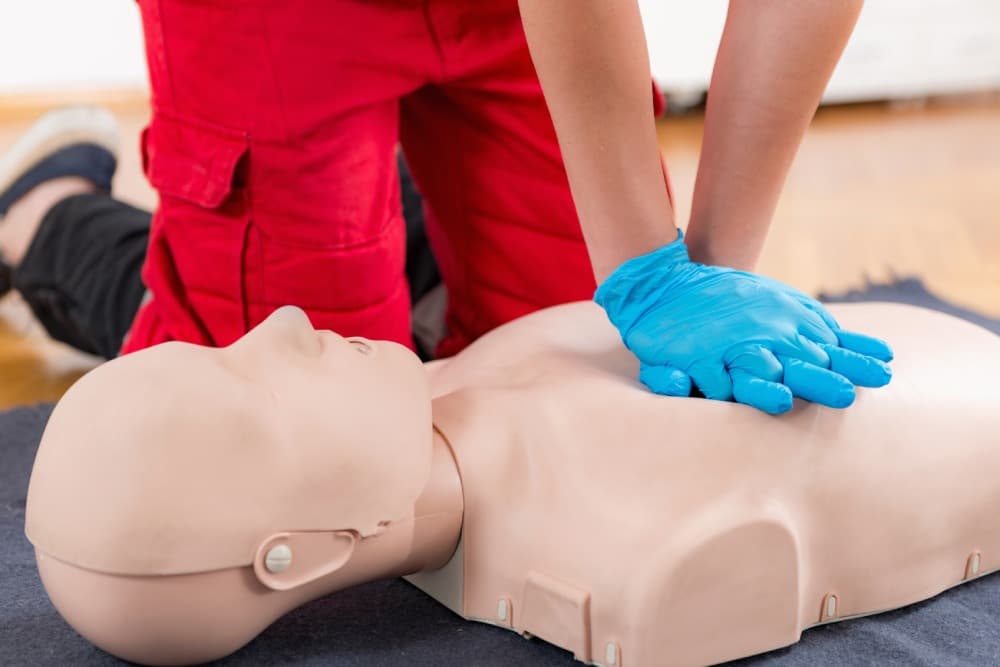
Hands-on practice: You cannot learn CPR from videos alone. Quality courses include physical practice with mannequins. You need to feel the resistance of a chest, understand how deep compressions actually go, and build muscle memory.
Current guidelines: CPR protocols change as research evolves. The best courses teach 2025-2026 American Heart Association or Red Cross guidelines, not outdated techniques from a decade ago.
Realistic scenarios: Good courses don't just teach compressions in isolation. They teach you to assess situations, call for help, use AEDs, handle choking, and manage real-world complications.
Quality instructors: Certified instructors who can actually teach matter. Someone who's taken CPR themselves doesn't automatically know how to teach it effectively.
Recognized certification: Your certificate should be accepted by employers, licensing boards, and organizations. Random online certificates from unknown providers often aren't.
Best In-Person CPR Courses
1. American Heart Association (AHA) CPR Courses
Provider: American Heart Association
Cost: $45-$90 depending on course level
Certification Validity: 2 years
Format: In-person with instructor, hands-on practice
Duration: 2-4 hours depending on course
What you'll learn: The AHA offers several course levels. Heartsaver CPR AED covers basic CPR and AED use for adults, children, and infants. BLS (Basic Life Support) is the professional-level course required for healthcare providers. Advanced courses like ACLS exist for medical professionals.
Why it's exceptional: AHA is the gold standard. Their research drives CPR protocols worldwide. Their certifications are recognized everywhere. The courses are well-structured, instructor-led, and include substantial hands-on practice.
You'll practice on quality mannequins that provide feedback. Instructors correct your technique in real-time. You'll learn not just compressions but the entire chain of survival, from recognition to calling 911 to using AEDs.
Best for: Healthcare professionals (BLS required), teachers, coaches, parents, workplace safety coordinators, anyone who needs nationally recognized certification.
How to find: Visit heart.org/cpr and search for courses by location. Training centers exist in most cities. Many hospitals, community colleges, and fire departments host AHA courses.
2. Red Cross CPR Certification
Provider: American Red Cross
Cost: $70-$110 depending on course and location
Certification Validity: 2 years
Format: In-person, hands-on training
Duration: 2-6 hours depending on course
What you'll learn: Red Cross offers Adult CPR/AED, Child and Baby CPR/AED, First Aid/CPR/AED combined courses, and professional-level training. Their curriculum covers compressions, rescue breathing, AED use, and first aid basics.
Why it's valuable: Red Cross competes with AHA for recognition and quality. Their courses are comprehensive, their instructors are professional, and their certifications are widely accepted. The combined First Aid/CPR/AED course is particularly valuable because cardiac events often involve other medical issues.
Red Cross also excels at teaching CPR in context. You'll learn how to handle choking, severe bleeding, and other emergencies alongside CPR.
Best for: General public, parents, babysitters, workplace responders, anyone wanting comprehensive emergency training beyond just CPR.
How to find: Visit redcross.org/take-a-class. Classes are offered at Red Cross chapters, community centers, workplaces, and partner locations nationwide.
3. Local Fire Department CPR Training
Provider: Municipal fire departments
Cost: Often free or very low cost ($10-$30)
Certification: Varies, often AHA or Red Cross certified
Format: In-person community classes
Duration: 2-4 hours
What you'll learn: Most fire departments offer basic CPR and AED training to community members. Course content typically follows AHA or Red Cross guidelines. You'll learn adult, child, and infant CPR, AED use, and often choking intervention.
Why it's exceptional: Fire departments want competent bystanders in their communities. They're not profit-driven, so courses are cheap or free. Instructors are firefighters and paramedics who've performed CPR in real emergencies, bringing practical experience to teaching.
The quality varies by department, but most use standard curricula and provide legitimate certifications.
Best for: Community members on tight budgets, people who want to learn from first responders, anyone who prefers learning from local experts.
How to find: Call your local fire department's non-emergency number or check their website. Many offer monthly or quarterly community CPR classes. Some departments coordinate with police or emergency management for joint training events.
Best Online and Blended CPR Courses
4. AHA and Red Cross Online CPR (Blended Learning)
Provider: American Heart Association or Red Cross
Cost: $35-$70 online portion, plus in-person skills check
Certification Validity: 2 years
Format: Online learning + in-person skills verification
Duration: 1-2 hours online, 1-2 hours in-person
What you'll learn: Complete cognitive learning online at your own pace, covering CPR theory, techniques, and protocols. Then attend a brief in-person skills session where an instructor verifies your hands-on competence.
Why it's valuable: Blended learning offers flexibility without sacrificing quality. You learn the knowledge components on your schedule, then demonstrate practical skills in person. This format is ideal for busy professionals who can't commit to half-day classes.
The certifications are identical to fully in-person courses. Employers don't distinguish between blended and traditional formats.
Best for: Working professionals, people with scheduling constraints, fast learners who don't need extensive lecture time, anyone comfortable with online learning.
How to find: Available through AHA and Red Cross websites. Complete the online portion first, then schedule the skills check at a testing center near you.
5. ProTrainings CPR Certification
Provider: ProTrainings
Cost: $15-$25 for online-only certification
Certification Validity: 1-2 years
Format: Fully online
Duration: 1-2 hours
What you'll learn: Video-based instruction covering CPR techniques, AED use, choking, and basic first aid. Includes knowledge tests to verify understanding.
Why it's valuable: ProTrainings offers some of the most affordable CPR certification available. While not as universally recognized as AHA or Red Cross, their certifications are accepted by many employers and organizations. The online-only format is convenient for people who need quick certification and have prior CPR knowledge.
Best for: Individuals needing certification for jobs that don't specify AHA/Red Cross, people renewing existing skills, volunteers, coaches for recreational programs, those on very tight budgets.
Important note: Fully online CPR certifications are controversial. Some employers don't accept them because they lack hands-on verification. Check requirements before choosing online-only courses.
Specialized CPR Courses
6. Infant and Child CPR (Pediatric Focus)
Providers: AHA, Red Cross, hospitals
Cost: $50-$90
Certification Validity: 2 years
Format: In-person
Duration: 2-4 hours
What you'll learn: CPR techniques specifically for infants and children, which differ significantly from adult CPR. Covers choking in infants and children, common pediatric emergencies, and using AEDs on kids.
Why it's essential: If you're a parent, grandparent, babysitter, daycare provider, or pediatric healthcare worker, you need pediatric-specific training. Infant CPR uses different compression techniques, different compression-to-breath ratios, and different considerations.
Best for: Parents, expectant parents, grandparents, babysitters, daycare workers, teachers, pediatric nurses, anyone regularly responsible for children.
7. Wilderness First Aid and CPR
Provider: NOLS, Wilderness Medical Associates, Red Cross
Cost: $200-$400 for comprehensive courses
Certification Validity: 2-3 years
Format: Multi-day in-person training
Duration: 2-5 days depending on course level
What you'll learn: CPR and first aid adapted for remote environments where professional help is hours or days away. Covers improvisation, extended care, environmental emergencies, and decision-making in austere conditions.
Why it's valuable: Standard CPR training assumes paramedics arrive in minutes. Wilderness medicine prepares you for scenarios where they won't. You'll learn when CPR is futile in wilderness settings, how to manage injuries long-term, and how to make evacuation decisions.
Best for: Outdoor guides, expedition leaders, backcountry enthusiasts, adventure travelers, search and rescue volunteers, anyone who spends serious time in remote areas.
Professional Healthcare CPR Training
8. BLS for Healthcare Providers (AHA)
Provider: American Heart Association
Cost: $60-$90
Certification Validity: 2 years
Format: In-person
Duration: 4-5 hours
What you'll learn: Professional-level CPR including two-rescuer CPR, bag-valve-mask ventilation, team dynamics, quality improvement, and high-performance CPR principles. More rigorous than lay responder courses.
Why it's required: Every healthcare professional needs BLS. Nurses, doctors, paramedics, EMTs, respiratory therapists, and many allied health workers must maintain current BLS certification.
Best for: Healthcare professionals, healthcare students, anyone working in clinical settings.
9. ACLS and PALS (Advanced Courses)
Provider: American Heart Association
Cost: $200-$300
Certification Validity: 2 years
Format: In-person, intensive
Duration: 1-2 days
What you'll learn: ACLS (Advanced Cardiovascular Life Support) covers pharmacology, advanced airway management, ECG interpretation, and cardiac arrest algorithms. PALS (Pediatric Advanced Life Support) focuses on critically ill children.
Why it's essential: Required for critical care nurses, emergency physicians, paramedics, and other providers managing cardiac emergencies with advanced interventions.
Best for: Advanced healthcare professionals only. Requires BLS as prerequisite.
How to Choose the Right CPR Course
Consider your purpose: Need certification for work? Check what your employer requires specifically. Want skills for personal knowledge? Basic courses work fine.
Check certification acceptance: If you need certification for employment or licensing, verify the provider is accepted before paying.
Evaluate your learning style: Hands-on learner? Choose in-person. Good with video instruction and self-motivated? Blended learning might work.
Factor in time and cost: Expensive doesn't always mean better. Free fire department courses often match the quality of $100 commercial courses.
Think about renewal: Certification lasts 1-2 years. Where will you renew? Some providers offer discounted renewals.
Consider additional skills: Combined CPR/First Aid courses cost slightly more but provide much more comprehensive emergency training.
Making Your Certification Count
Getting certified is step one. Retaining the skills matters more.
Practice periodically: Skills decay without use. Review techniques every few months. Many organizations offer free practice sessions for certified individuals.
Take refresher courses: Don't wait until expiration. Refresh skills at 18 months rather than waiting the full two years.
Stay current: CPR guidelines change. Subscribe to AHA or Red Cross updates to learn about protocol changes.
Teach others: Teaching family members or friends reinforces your own knowledge and multiplies the benefit.
Keep certification accessible: Upload your certificate to your phone. In emergencies, you might need to verify credentials quickly.
Conclusion
CPR certification isn't just a checkbox on an employment application. It's a fundamental life skill that everyone should have. The courses exist, they're accessible, and they're more convenient than ever.
You'll spend more time choosing a Netflix show this week than it would take to get certified. The course you skip today might be the skill that saves someone you love tomorrow.
Stop thinking about getting certified someday. Make 2026 the year you actually do it. Find a course, schedule it, show up, and learn a skill that might matter more than almost anything else you'll learn this year.


